
Embroidery businesses have a unique mix of sales: quick counter transactions, custom orders that take deposits, phone payments for repeat customers, invoices for teams and schools, online orders for personalized merch, and occasional on-the-go events like craft fairs.
That mix is exactly why comparing payment processors for embroidery shops is different from comparing processors for a typical retail store.
When you compare payment processors for embroidery shops, you are not just shopping for a “rate.” You are choosing how smoothly you can take deposits, how safely you can key in a card over the phone, how quickly you can get paid after delivering custom work, and how well your system handles refunds, partial payments, chargebacks, and sales tax reporting.
The best payment processors for embroidery shops also support inventory for blanks (shirts, hats, jackets), SKU-level reporting for thread colors or design add-ons, and customer profiles that make reorders fast.
This guide walks you through a practical, decision-first way to compare payment processors for embroidery shops so you can pick the right fit now, avoid hidden fees, and stay ready for where payments are headed next (more contactless, more mobile, more automation, and more real-time data).
Understand Your Embroidery Shop Payment Flow Before You Compare Processors
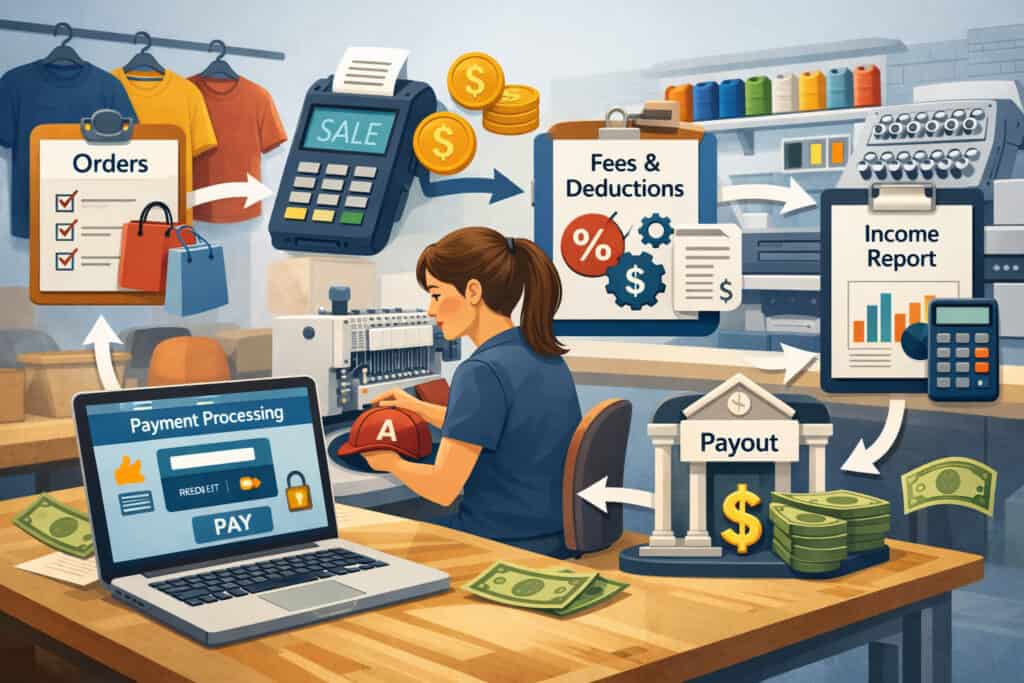
Before you compare payment processors for embroidery shops, you need a clear picture of how money moves through your business. Embroidery is rarely a simple “tap and go” sale. Many jobs start with a quote, then a deposit, then an approval step, then a final invoice. Your processor has to support that reality without forcing you into workarounds.
Start by listing your transaction types: in-store card-present sales, card-not-present payments (phone or invoice links), online checkout, and recurring billing for organizations that reorder monthly.
Each type carries different costs and risks. In-person EMV or tap transactions are generally lower risk than keyed transactions, which can be priced higher because fraud risk is higher.
That matters when evaluating payment processors for embroidery shops, because a shop that keys in a lot of cards for deposits may pay more than a shop that mostly takes tap payments at the counter.
Next, map your “order lifecycle.” Do you take 50% down? Do you store cards on file for add-ons? Do you need to split payments across multiple cards for team orders?
The best payment processors for embroidery shops can handle partial payments, pre-authorizations (when appropriate), stored credentials with proper customer consent, and easy invoice reminders.
Finally, include operational needs: multiple registers, multiple staff logins, permissions, end-of-day settlement reports, and accounting exports. If you skip this step, you may choose a cheap processor that becomes expensive in time, errors, and lost sales.
Learn the Real Cost Structure: Interchange, Assessments, and Markup

One of the biggest mistakes when comparing payment processors for embroidery shops is focusing only on the advertised rate. Most pricing has layers, and understanding those layers gives you negotiating power and prevents surprises.
Card acceptance costs typically include (1) interchange, (2) card-network assessments, and (3) the processor’s markup. Interchange and assessments are generally not “set” by your processor; they are base costs tied to the card type, method of acceptance, and risk signals. Your processor then adds its own margin.
Many small businesses see different effective costs depending on whether a transaction is in-person vs keyed or online. Some sources summarize that in-person transactions often cost less than online and manually keyed payments due to lower fraud risk and better data quality.
When you compare payment processors for embroidery shops, ask how pricing is presented:
- Interchange-plus: base costs plus a transparent markup.
- Flat rate: simple, predictable, but can be higher for certain mixes.
- Tiered pricing: often the hardest to verify and compare.
Embroidery shops often have a mixed basket (custom orders, deposits, phone payments, and invoices). That mix can make flat-rate pricing feel convenient, but it can also mask higher costs for debit and regulated transactions that might have been cheaper under interchange-plus.
Also watch for “non-rate” costs: monthly fees, statement fees, PCI or compliance fees, gateway fees, batch fees, chargeback fees, and equipment leases. The best payment processors for embroidery shops provide a clean fee schedule and help you estimate a realistic “effective rate” based on your specific mix.
Compare Payment Acceptance Methods That Matter for Embroidery Shops
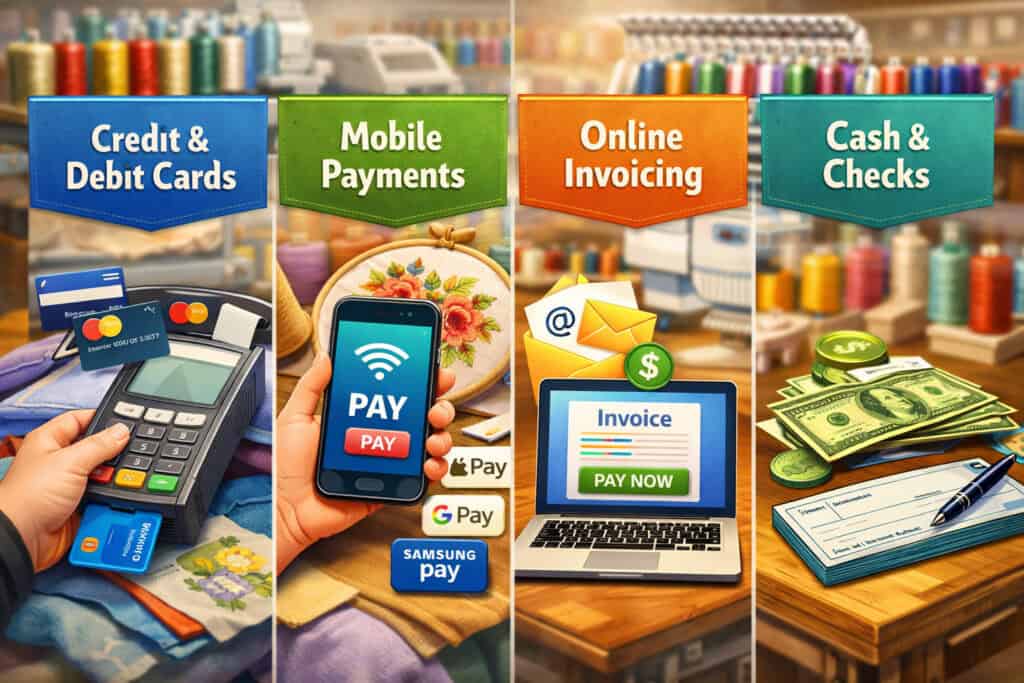
Comparing payment processors for embroidery shops means comparing the ways you get paid, not only the fees. An embroidery business needs flexibility because customers pay at different points in the process.
Countertop and Retail Checkout (Card-Present)
If you have walk-in traffic, you want fast checkout: tap, chip, swipe (fallback), and digital wallets. Look for EMV compliance, contactless acceptance, offline mode (if your internet drops), and quick tip/receipt options if you do any service-like add-ons.
Card-present acceptance can also reduce disputes because you have better evidence (EMV data, receipt, sometimes signature prompts depending on setup). This can matter for custom products where “I didn’t authorize this” disputes can be costly.
Invoices and Pay Links for Custom Orders
Many embroidery orders start as a quote. The best payment processors for embroidery shops include invoicing that supports:
- Deposit requests
- Partial payments
- Itemized line items (setup fee, digitizing, garment cost, embroidery cost)
- Automated reminders
- Payment links customers can pay from their phone
Invoice tools should also make it easy to attach terms (approval, turnaround time, refund policy for custom items).
Phone and Keyed Transactions
If you take card numbers over the phone, compare:
- Keyed rate pricing (often higher)
- Fraud tools like AVS/CVV checks
- Secure virtual terminal
- Stored credential compliance (if saving cards with permission)
A processor that supports strong verification tools and clear receipts can be worth more than a slightly cheaper rate.
Mobile and Event Payments
Craft fairs and pop-ups are common for embroidery brands. Compare payment processors for embroidery shops on:
- Mobile reader reliability
- Battery life
- Cellular fallback options
- Inventory sync between mobile and shop
Also consider smartphone-based acceptance options. Apple provides a list of regions and explains that “Tap to Pay on iPhone” requires integration with supported payment providers and certified configurations. This matters because it can reduce hardware needs for events and overflow registers.
Evaluate POS Features Specifically for Embroidery Operations
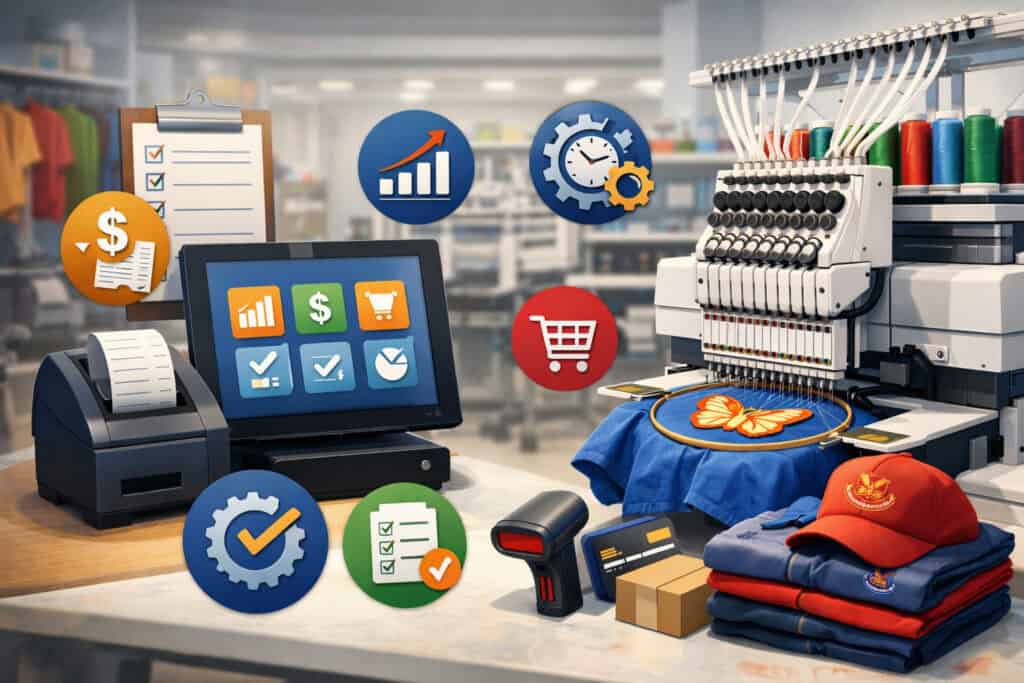
A generic POS can work for embroidery, but purpose-fit workflows will save you hours every week. When you compare payment processors for embroidery shops, evaluate the POS as if you are hiring an operations assistant.
Product and Inventory Handling for Blanks and Add-Ons
Embroidery inventory is not just finished goods. You may stock blanks (hats, polos, hoodies), thread colors, patches, and stabilizers. Your system should handle variants (size, color), bundles (shirt + embroidery), and low-stock alerts. Even if you don’t run a full inventory program, basic SKU reporting helps you identify profitable products.
Custom Order Management
Many embroidery shops need notes, proofs, and order statuses. A processor with POS tools (or integrations) that can track:
- Customer approvals
- Due dates
- Rush fees
- Pickup/delivery status
reduces missed details and makes staff training easier.
Deposits, Split Payments, and Balance Due
This is huge for comparing payment processors for embroidery shops. Make sure the system can:
- Take a deposit and automatically track the remaining balance
- Accept split tender (two cards, card + cash)
- Apply payments to specific invoices
- Handle refunds correctly (full or partial)
If you do team orders, you may also need multiple payers contributing to one job.
Multi-Location and Multi-User Controls
If you have more than one machine, more than one register, or more than one staff member, you need permissions, audit trails, and user-level reporting. This reduces internal errors and speeds up reconciliation.
Security, PCI, and Fraud Tools: What Embroidery Shops Should Prioritize
Embroidery shops often take remote payments for deposits and reorders. That makes security and fraud controls non-negotiable when comparing payment processors for embroidery shops.
Start with PCI handling. You want a processor and POS that reduce your scope by tokenizing card data and avoiding raw card storage on your systems.
If you store cards on file for repeat customers, confirm it’s stored as a token with proper customer consent and secure authentication. Avoid “notes fields” or spreadsheets for card data—those practices create major risk.
For fraud, compare tools like:
- AVS and CVV checks for keyed transactions
- Velocity limits (too many attempts)
- Device fingerprinting for online checkouts
- 3D Secure options for ecommerce (when available)
Chargebacks matter more for custom work because the product is often non-resellable. Good payment processors for embroidery shops provide a chargeback portal, clear evidence requirements, and fast notifications so you can respond before deadlines.
Also evaluate dispute prevention: digital receipts, signed approvals for custom designs, and invoice terms displayed before payment. The processor won’t run your business for you, but the right tools make good policy easier to enforce.
Payout Speed, Cash Flow, and Deposit Timing for Custom Production
Cash flow is a core reason to carefully compare payment processors for embroidery shops. You may pay for blanks and labor days before you deliver the finished product. Faster, more predictable deposits can reduce stress and help you scale.
Compare these payout details:
- Standard deposit schedule (next day, two-day, etc.)
- Cutoff times (what time a transaction must be captured to be included)
- Weekend and holiday funding rules
- Instant payout options and their fees (if offered)
Also compare reserve policies and risk holds. Some processors hold funds for businesses they classify as higher risk, or if they see unusual spikes.
Embroidery is usually not “high risk,” but sudden growth, high ticket orders, or a surge of keyed transactions can trigger reviews. Ask directly: what triggers a hold, how long can it last, and what documentation is required?
When comparing payment processors for embroidery shops, look for transparent underwriting and support access. If you ever face a funding delay during your busy season, being able to reach a knowledgeable risk team matters more than saving a few basis points.
Contracts, Equipment, and Hidden Fees: How to Read the Fine Print
If you want to choose the right payment processors for embroidery shops, you must compare contracts and hardware terms—not just the sales pitch.
Contract Length and Early Termination
Some providers offer true month-to-month service. Others have multi-year agreements with early termination fees. Even if your shop is stable, you want flexibility because technology and pricing change.
Equipment: Buy vs Lease
Leasing terminals is often expensive over time. Buying hardware upfront may cost more today but less over the long run. Also compare whether the device is locked to one provider and whether it supports modern acceptance like contactless and mobile wallet payments.
Common Fees That Distort Comparisons
When comparing payment processors for embroidery shops, request a full fee schedule and look for:
- Monthly minimums
- PCI fees
- Gateway fees (especially for ecommerce)
- Annual fees
- Statement fees
- Batch/settlement fees
- Chargeback fees
- Address verification fees (sometimes)
Also ask how rates can change. Some contracts allow “rate increases” or “non-qualified surcharges” without clear triggers. A transparent provider should be able to show you how your effective cost is calculated and how they communicate changes.
Surcharging, Cash Discounting, and Compliance Considerations
Many shop owners explore ways to offset processing costs. If you’re considering surcharging or cash discounting, comparing payment processors for embroidery shops must include compliance support.
Visa provides guidance that surcharging rules discussed in its merchant Q&A apply to purchases made in specific regions and include brand-level or product-level approaches, with restrictions on how surcharges can be applied. Mastercard also publishes merchant guidance including a maximum surcharge cap and disclosure requirements.
What this means in practice: if you surcharge credit cards, you must follow card brand rules and any applicable state rules. The safe approach is to work with a processor that provides compliant setup, correct receipt messaging, and clear signage guidance.
When comparing payment processors for embroidery shops, ask:
- Do you support compliant surcharging configurations?
- Do receipts show the surcharge properly?
- Do you provide signage templates and disclosures?
- Can you exclude debit where required by rules and best practices?
If you don’t want surcharging, ask about lower-cost acceptance strategies: encouraging debit, optimizing for card-present acceptance, improving invoice payment links to reduce keyed transactions, and tightening fraud settings to avoid downgrades.
Integrations: Accounting, Ecommerce, Shipping, and Design Workflow
Embroidery shops run on systems: design tools, ordering workflows, production schedules, and bookkeeping. When comparing payment processors for embroidery shops, integrations can outweigh minor price differences.
Accounting and Bookkeeping
Look for clean exports to your accounting platform, automatic categorization, and payout reconciliation reports. The best processors also let you map taxes correctly and track tips (if you use them) separately from product revenue.
Ecommerce Platforms
If you sell online, compare:
- Checkout customization
- Fraud tools
- Subscription support (for clubs or recurring uniforms)
- Inventory sync with in-store sales
Embroidery sites often use product personalization fields (names, numbers, logo placement). Make sure your checkout data flows cleanly into your order system, or you’ll spend hours chasing details.
Shipping and Order Notifications
If you ship, integrations with shipping tools can automate labels and tracking emails. Customers appreciate proactive updates, and fewer “where is my order?” messages means more time producing.
CRM and Customer History
Repeat orders are common: teams reorder, businesses add new hires, schools reorder annually. Compare payment processors for embroidery shops on customer profiles, saved invoices, and purchase history. A system that makes reorders easy increases revenue without increasing marketing spend.
Support Quality and Risk Management: What to Test Before You Commit
Support is not a “nice to have” in payment processing. It is part of the product. When comparing payment processors for embroidery shops, test support the way you test a machine before buying it.
Call or chat at least twice:
- Ask a pricing question (to see if they can explain clearly).
- Ask a risk/funding question (to see if they can handle serious issues).
Evaluate:
- Do you get a real person quickly?
- Do they understand small business workflows?
- Do they offer proactive guidance (chargeback prevention, fraud settings, invoice best practices)?
Also compare onboarding: data migration, training, device setup, and how quickly you can go live. If you are switching processors, ask how they handle chargeback evidence from past transactions and whether you can export historical reports.
For payment processors for embroidery shops, risk management matters because custom work can trigger disputes if expectations are unclear. Good providers help you set up receipts, invoices, and policies that reduce “friendly fraud” and misunderstandings.
Step-by-Step Comparison Checklist for Payment Processors for Embroidery Shops
Use this checklist to make an apples-to-apples comparison of payment processors for embroidery shops. Each point should be answered in writing by the provider (email or proposal), not only verbally.
Pricing and Fees
Confirm:
- Pricing model (interchange-plus, flat, tiered)
- Markup amount and per-transaction fee
- Monthly fees and minimums
- Chargeback fee
- Refund fee policy
- PCI/compliance fees
Also request an estimate based on your transaction mix. Some sources publish average costs that vary by network and method, showing in-person vs keyed/online differences. Use those ranges as a reference point, but demand a projection based on your reality.
Features You Need for Embroidery
Confirm:
- Deposits and partial payments
- Invoicing and pay links
- Custom items and notes
- Inventory for blanks and variants
- Customer profiles and reorder tools
Hardware and Mobility
Confirm:
- EMV + contactless support
- Mobile reader and reliability
- Offline mode
- Warranty and replacement time
Funding and Account Stability
Confirm:
- Deposit timing
- Hold/reserve policies
- What triggers reviews
- Support access during holds
Compliance and Policy Tools
Confirm:
- Tax handling
- Receipt customization
- Surcharging/cash discounting support (if needed)
When you compare payment processors for embroidery shops using the same checklist each time, you prevent sales pitches from hijacking the decision.
Future Predictions: Where Payments for Embroidery Shops Are Headed
To choose future-ready payment processors for embroidery shops, pay attention to trends that are already shaping buyer behavior and processor capabilities.
More Tap-to-Pay and Less Hardware
Smartphone-based acceptance is expanding. Apple’s developer documentation highlights that Tap to Pay on iPhone depends on integration with supported payment providers and certified configurations. This points to a future where embroidery shops can spin up a new register quickly during peak seasons without buying extra terminals.
More Automation in Invoicing and Deposits
Customers increasingly expect digital invoices, payment links, and instant confirmations. Processors that automate reminders, support partial payments cleanly, and connect payment status to order workflow will feel “modern” and win repeat business.
Tighter Fraud Controls and More Authentication
As online and invoice payments grow, expect stronger authentication tools and smarter fraud scoring. Shops that rely on keyed deposits will benefit from processors that invest in risk tools rather than just offering a low rate.
More Transparency Pressure on Fees
Fee discussions continue evolving in the payments industry, and merchants are paying closer attention to the difference between base costs and processor markup. Expect more demand for clear interchange-plus pricing and better reporting that explains “why that transaction cost more.”
Choosing payment processors for embroidery shops that keep pace with mobile acceptance, automation, and security will reduce the chance you need to switch again in 12–24 months.
FAQs
Q.1: What are the most important features in payment processors for embroidery shops?
Answer: The most important features in payment processors for embroidery shops are deposits and partial payments, invoicing with pay links, reliable card-present acceptance, customer profiles for reorders, and reporting that separates product revenue from taxes and fees.
Embroidery is order-based, so the processor must support the full workflow: quote → deposit → production → balance due. Without those features, you spend time patching gaps with manual tracking, which increases errors and slows down turnaround.
Q.2: Should embroidery shops choose flat-rate or interchange-plus pricing?
Answer: It depends on your mix. Flat-rate pricing is simple and predictable, which helps newer shops. Interchange-plus can be more transparent and can be cost-effective when you have a healthy share of card-present debit and lower-risk transactions.
Since payment processors for embroidery shops often handle both in-person and invoice/keyed payments, ask for a quote that reflects your real mix. Use provider reporting to track your effective rate after 60–90 days and renegotiate if needed.
Q.3: How do chargebacks affect embroidery shops, and what should I look for?
Answer: Chargebacks can be painful because custom items are hard to resell. When comparing payment processors for embroidery shops, look for fast dispute notifications, an evidence portal, and tools to attach invoice terms and customer approvals.
Also prioritize processors with strong fraud tools for card-not-present payments and clear receipt/invoice customization to reduce misunderstandings about turnaround time and refund policies.
Q.4: Can I add a surcharge to cover processing fees?
Answer: Some merchants use surcharging, but it must be done correctly. Visa and Mastercard publish rules and disclosure requirements, including caps and how surcharges can be applied.
If you are considering it, choose payment processors for embroidery shops that support compliant configuration, receipt wording, and signage guidance. Also check state-level rules with a qualified advisor or your processor’s compliance resources.
Q.5: What is “Tap to Pay” and does it matter for embroidery shops?
Answer: Tap to Pay allows a phone to accept contactless payments in certain setups. Apple’s documentation explains availability and that you need a supported payment provider integration with certified configurations.
For embroidery shops, it matters because it can reduce hardware costs for pop-ups, events, or seasonal overflow registers—useful if you do craft fairs or holiday rush sales.
Q.6: How can I compare payment processors for embroidery shops without getting lost in sales pitches?
Answer: Use a standardized checklist: pricing model, full fee schedule, deposit timing, risk/hold policies, invoicing and deposit features, hardware terms, integrations, and support quality. Make every provider answer the same questions in writing.
Comparing payment processors for embroidery shops becomes much easier when you control the evaluation format instead of reacting to marketing.
Conclusion
Comparing payment processors for embroidery shops is really about choosing a system that fits custom production. Rates matter, but your daily reality matters more: deposits, partial payments, invoices, remote payments, reorder history, and clean reporting.
A processor that saves you time, reduces disputes, and keeps funding predictable can outperform a slightly cheaper option that creates operational friction.
To make the right decision, start with your payment flow and transaction mix, then evaluate pricing transparency, acceptance methods, POS and inventory needs, fraud tools, deposit timing, contract terms, and integrations.
Use the same checklist for every provider so you can compare fairly. If you plan to surcharge or use other cost-offset strategies, confirm compliance support using the card brand guidance and your provider’s tools.
The best payment processors for embroidery shops will also be future-ready: mobile acceptance, automated invoicing, improved fraud controls, and better reporting clarity. Choose the processor that makes it easy to get paid the way your customers already want to pay—and your embroidery shop will be positioned to grow with less stress and more control.